Dead Mouse Spiritual Meaning: Symbols, Omens & Hidden Messages
June 1, 2026
By: Hayat
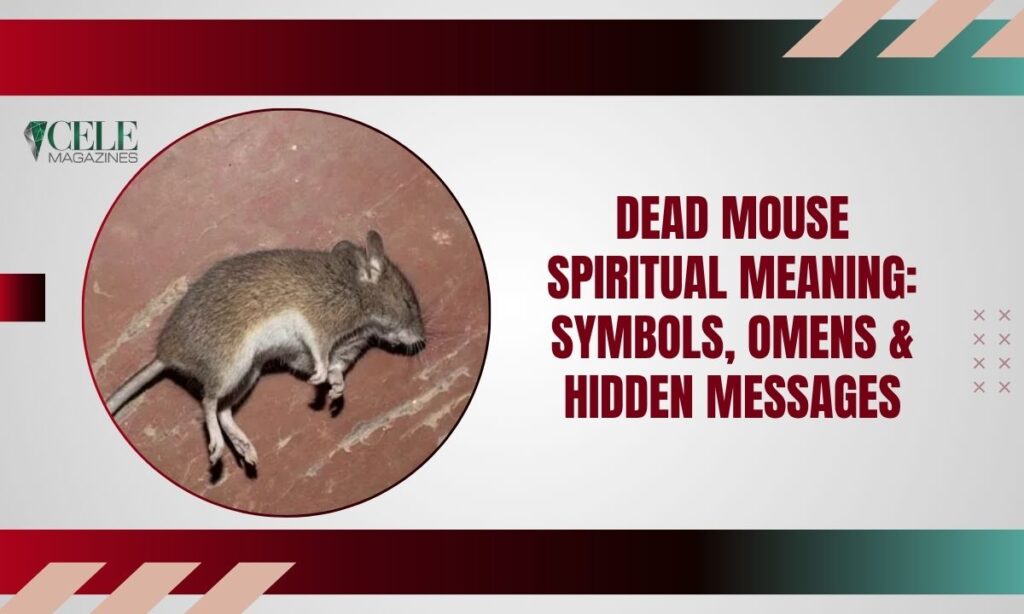
You walk into a room. A tiny, lifeless mouse is on the floor. Most people shudder and reach for a broom — but mystics, cultures, and spiritual traditions ask a very different question. What is this small creature trying to tell you?
A dead mouse is a powerful spiritual symbol. It sits at the intersection of endings, awareness, and transformation.
Across traditions, the mouse represents attention to detail, quiet survival, and resourcefulness. When it appears lifeless, those qualities take on a new layer of meaning — something has ended, or something overlooked now demands your attention.
Key Spiritual Themes a Dead Mouse Carries
Before diving deep, here are the core themes this symbol touches:
Endings and transition — a chapter closing
Neglected details — small things you have been ignoring
Vulnerability — a reminder of mortality and humility
Hidden warnings — something beneath the surface needs addressing
Renewal — death making space for what comes next
Spiritual cleansing — releasing toxic energy or outdated habits
Endings and Transition
A dead mouse marks a turning point. Something in your life is finishing.
This could be a relationship, a job, a mindset, or a fear you have carried too long. The mouse does not die randomly in spiritual thought — it arrives as a signal that a cycle is complete.
What Kind of Ending Does It Signal?
The ending is rarely dramatic. The mouse is a small creature, and so the message often points to quiet, personal closures rather than major upheavals.
It might be the end of a habit you have outgrown. It could be the closing of a friendship that no longer serves you. Pay attention to what feels finished in your life right now.
Neglected Details
Mice are creatures of precision. They notice every crack, every gap, every crumb.
A dead mouse often signals that you have stopped paying attention to the small things. Something minor — but important — has slipped past you.
What You Might Be Missing
Ask yourself: what have you been glossing over lately? A fine-print clause in an agreement? A change in someone’s behavior? A health symptom you dismissed?
The dead mouse says: look again. Carefully. What you missed might matter more than you think.
Vulnerability and Humility
The mouse is not a lion or an eagle. It is small, quiet, and easy to overlook.
Finding one dead is a gentle nudge toward humility. You are not invincible. Your plans are not bulletproof. Life is fragile and fleeting.
Why This Message Matters Now
In a culture that glorifies hustle and certainty, the dead mouse asks you to soften. Acknowledge what you cannot control. Accept that some things simply end.
That acceptance is not weakness. It is wisdom.
Hidden Warnings
Sometimes a dead mouse is a warning, not a comfort.
In folklore and spiritual traditions worldwide, it can point to hidden dangers — things you cannot yet see but should prepare for. Something in your environment, a relationship, or a situation may not be as safe as it appears.
Reading the Warning Clearly
Found near a doorway? Something may be threatening your home or sense of security.
Found in the workplace? A hidden conflict or professional risk may be building.
Found repeatedly? The universe is amplifying a message you have not yet acted on.
Do not panic. But do pay attention.
Renewal and Spiritual Cleansing
Every ending creates space. A dead mouse is not just a closing — it is an opening.
Many spiritual traditions interpret it as an invitation to cleanse. Clear out what is stagnant, toxic, or expired in your life. Make room for what is fresh.
How to Respond Spiritually
Physically clean the space where you found it
Reflect on what mental or emotional clutter you are holding
Set an intention to release one thing that no longer serves you
Some people light a candle or burn sage as a symbolic reset
End of careful observation; a call to heighten awareness
Chinese / East Asian
Blocked creativity or the need for spiritual cleansing
European Folklore
Bad luck or poverty; later reframed as attention to detail
Celtic
Marker of life cycles; quiet protection during change
Ancient Egypt
Ritual significance; connection to transformation and the afterlife
Christianity
Purification; releasing what contaminates the spirit
Dead Mouse in Christianity and the Bible
The Bible does not mention dead mice directly. But mice appear in scripture as symbols of plague, uncleanness, and judgment (1 Samuel 6:4–5).
In Christian spiritual thought, a dead mouse often points to the need for inner cleansing. It signals the death of impurity or the removal of something that was corrupting your spiritual life. Many interpret it as an invitation to examine your heart and return to sincerity.
The Deeper Biblical Lesson
Jesus repeatedly taught that true purity is internal, not just external. A dead mouse in this context can represent the dying of old habits, sinful patterns, or empty religious rituals.
It asks: are you going through the motions, or are you truly transformed? It is a small but direct question.
Dead Mouse in Hinduism
In Hinduism, the mouse is sacred. It is the vahana — the vehicle — of Lord Ganesha, the remover of obstacles.
A dead mouse in this context carries particular weight. It may suggest that an obstacle in your life has been removed. Or it may signal that you have lost the careful, detail-oriented energy that helps you navigate challenges.
Ganesha’s Mouse and What Its Death Suggests
Ganesha’s mouse (Mushika) represents the ego and desire. A dead mouse spiritually reflects the taming or ending of ego-driven behavior.
If you have been acting from pride or selfish desire, this symbol is a message to return to humility. Let the ego quiet down.
Dead Mouse in Dreams
Dreams about dead mice carry specific meanings. They are almost universally connected to the resolution of something buried.
Most dream analysts consider a dead mouse in a dream to be positive. It suggests you are overcoming a worry, releasing a fear, or resolving a hidden issue.
Common Dead Mouse Dream Scenarios
Dream Scenario
Likely Meaning
Finding a dead mouse
Overcoming a hidden fear or anxiety
Dead mouse in your home
Need to cleanse your personal or domestic life
Dead white mouse
End of purity-related conflict; new beginnings
Dead black mouse
Resolution of a dishonest situation or toxic pattern
Many dead mice
Major emotional clearing; multiple issues resolving at once
Dead mouse at your door
You do not need external validation; stand on your own
Relief in the dream? The fear or burden it represented is truly lifting. Sadness or disgust? You may be grieving an ending you have not consciously acknowledged yet.
Dead Mouse at Your Door: Specific Meaning
Finding a dead mouse specifically at your door is one of the most discussed variations of this symbol.
The door is a threshold — a boundary between your private world and the outside. A dead mouse here carries a strong message about boundaries and self-reliance.
It suggests you have been seeking too much external validation
It signals that something trying to enter your life is no longer a threat
It marks a transition: what was outside is now resolved
Spiritually, your door is your boundary. This symbol says: stand in your own power.
Dead Mouse as an Omen: Good or Bad?
This question gets asked constantly — and the honest answer is: it depends on the tradition and the context.
Interpretation
Tradition
Bad omen: poverty or illness
European folk belief
Good omen: fears resolved
Modern spiritual thought
Neutral: a cycle ending
Native American tradition
Warning: spiritual contamination
Biblical context
Liberation: ego defeated
Hindu symbolism
The balanced view is this: a dead mouse is rarely purely good or purely bad. It is a message. Your job is to receive it honestly and respond.
What Color Was the Mouse? It Changes the Meaning
Color adds another layer to the symbolism.
White dead mouse — End of a pure-hearted effort; or the death of an illusion you held sacred. Can also signal new beginnings after loss.
Black dead mouse — Resolution of something shadowy or dishonest. A toxic pattern has ended. Good riddance.
Gray dead mouse — The most neutral. A quiet ending. Life returning to balance after a grey, uncertain period.
Brown dead mouse — Earthy, grounded endings. Practical matters — finances, work, home — are resolving or closing.
Practical Steps After Finding a Dead Mouse
Finding it is one thing. What you do next matters spiritually.
Pause before reacting — Take a breath. Acknowledge the symbol before you dispose of it.
Reflect on your life — What chapter feels like it is closing? What have you been ignoring?
Clean the space — Physically clean the area. Many traditions recommend smudging with sage or lighting incense.
Set an intention — Speak aloud (or write) what you are ready to release.
Move forward — Do not dwell. The message is received. Now act on it.
Frequently Asked Questions
What does a dead mouse symbolize spiritually?
It symbolizes endings, transition, neglected details, and a call to cleanse or renew some area of your life.
Is finding a dead mouse a bad omen?
Not always — many traditions view it as the resolution of a fear or the end of a negative cycle, not purely bad luck.
What does it mean to dream of a dead mouse?
It usually signals you are overcoming a buried anxiety or resolving a hidden emotional issue — often a positive sign.
What does a dead mouse at your door mean spiritually?
It suggests you do not need external validation and that something threatening your boundaries has lost its power.
What should you do spiritually when you find a dead mouse?
Pause, reflect on what is ending in your life, physically clean the space, and set a clear intention to release what no longer serves you.
Conclusion
A dead mouse is small, but its message is anything but. It asks you to slow down, look closer, and let go of what has run its course. Across every culture and tradition, this tiny symbol carries the same quiet wisdom: endings are not failures, they are invitations — to cleanse, to grow, and to pay attention to the details that shape your life.
Hayat has 10 years of experience creating content on prayers, Bible and blessings. She runs celemagzines.com, sharing simple and meaningful spiritual guidance.